PUBLICATION
Model-Based Systems Architecture
Comparing Measured Agile Software Development Metrics Using An Agile Model-Based Software Engineering Approach versus Scrum Only
This study compares the reliability of estimation, productivity, and defect rate metrics for sprints driven by a specific instance of the agile approach (i.e., scrum) and an agile model-Bbased software engineering (MBSE) approach called the integrated Scrum Model-Based System Architecture Process (sMBSAP) when developing a software system. The quasi-experimental study conducted ten sprints using each approach. The approaches were then evaluated based on their effectiveness in helping the product development team estimate the backlog items that they could build during a time-boxed sprint and deliver more product backlog items (PBI) with fewer defects. The commitment reliability (𝐶𝑅) was calculated to compare the reliability of estimation with a measured average scrum-driven value of 0.81 versus a statistically different average sMBSAP-driven value of 0.94. Similarly, the average sprint velocity (𝑆𝑉) for the scrum-driven sprints was 26.8 versus 31.8 for the MBSAP-driven sprints. The average defect density (𝐷𝐷) for the scrum-driven sprints was 0.91, while that of the sMBSAP-driven sprints was 0.63. The average defect leakage (𝐷𝐿) for the scrum-driven sprints was 0.20, while that of the sMBSAP-driven sprints was 0.15. The t-test analysis concluded that the sMBSAP-driven sprints were associated with a statistically significant larger mean 𝐶𝑅, 𝑆𝑉, 𝐷𝐷, and 𝐷𝐿 than that of the scrum-driven sprints. The overall results demonstrate formal quantitative benefits of an agile MBSE approach compared to an agile alone, thereby strengthening the case for considering agile MBSE methods within the software development community. Future work might include comparing agile and agile MBSE methods using alternative research designs and further software development objectives, techniques, and metrics.
Model-Based Systems Architecture
An Agile Model-Based Systems Engineering Approach Illustrated Through the Development of a Health Technology Systems
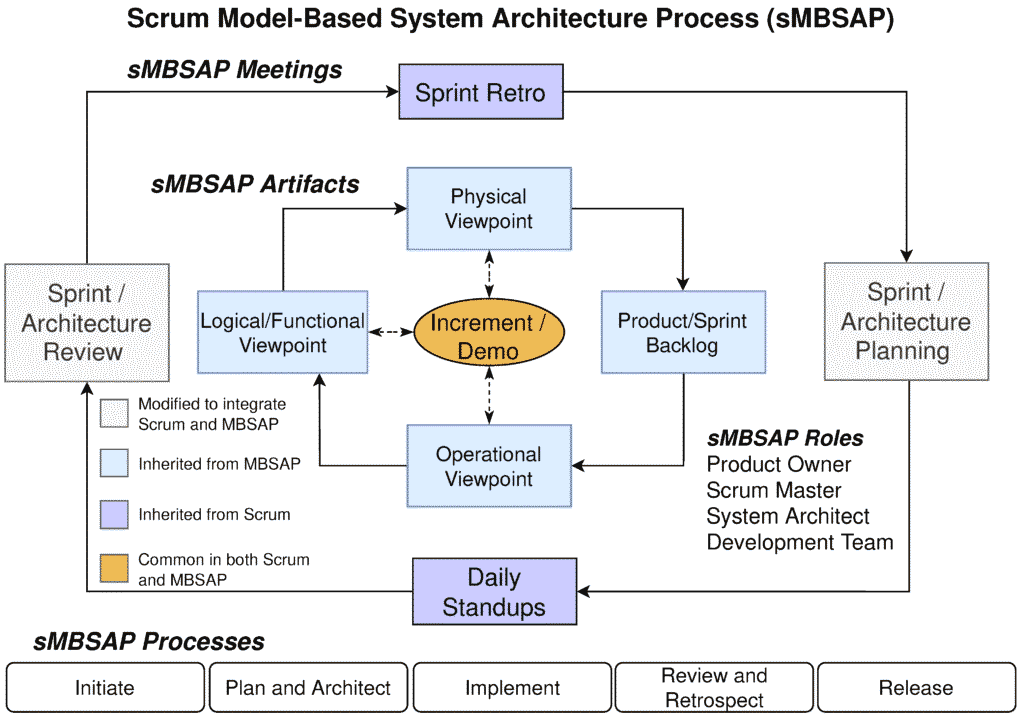
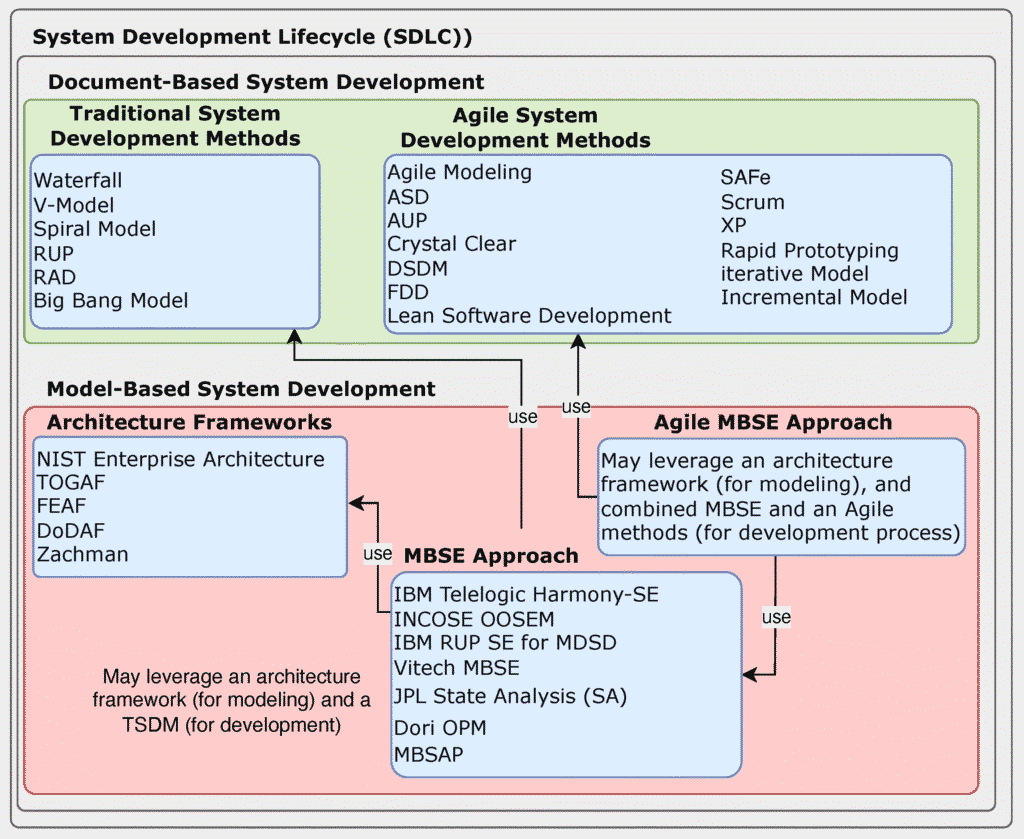
Model-Based Software Engineering (MBSE) is an architecture-based software development approach. Agile, on the other hand, is a light system development approach that originated in software development. To bring together the benefits of both approaches, this article proposes an integrated Agile MBSE approach that adopts a specific instance of the Agile approach (i.e., Scrum) in combination with a specific instance of an MBSE approach (i.e., Model-Based System Architecture Process—“MBSAP”) to create an Agile MBSE approach called the integrated Scrum Model-Based System Architecture Process (sMBSAP). The proposed approach was validated through a pilot study that developed a health technology system over one year, successfully producing the desired software product. This work focuses on determining whether the proposed sMBSAP approach can deliver the desired Product Increments with the support of an MBSE process. The interaction of the Product Development Team with the MBSE tool, the generation of the system model, and the delivery of the Product Increments were observed. The preliminary results showed that the proposed approach contributed to achieving the desired system development outcomes and, at the same time, generated complete system architecture artifacts that would not have been developed if Agile had been used alone. Therefore, the main contribution of this research lies in introducing a practical and operational method for merging Agile and MBSE. In parallel, the results suggest that sMBSAP is a middle ground that is more aligned with federal and state regulations, as it addresses the technical debt concerns. Future work will analyze the results of a quasi-experiment on this approach focused on measuring system development performance through common metrics.